Screen-free play
Slow Maze Time
Slow Maze Time is meant to feel calm and concrete for ages 4–7.
Think of this as one contained 5-minute round for ages 4–7. Choose it when you need lower-noise play for a shared space or wind-down. For Slow Maze Time, have paper ready before the first round. Allow about 2 minutes for setup.
Set the scene
Start with one complete, ordinary round. Choose a simple wide-path maze with a clear start and finish. Then trace the first route with a fingertip and pause at each junction. Once that feels clear, choose a direction before moving the finger through the junction. If that is working, leave the rules alone and let the child concentrate on attention and turn taking.
Let the child take more of the lead
In Slow Maze Time, a few focused minutes are enough; there is no need to repeat the activity until attention is gone. A useful checkpoint comes near the end of the sequence: Let the child make one extra dead end or design a short maze for the adult.
Wrap up the round
A natural place to stop Slow Maze Time is after the closing step: Let the child make one extra dead end or design a short maze for the adult. If the child asks for another round, keep the same setup once more and let attention stay at the center of the quiet and calm play activity.
If Slow Maze Time is not the right fit, browse more restaurant games for kids.
What you need
- paper
How to play
- Choose a simple wide-path maze with a clear start and finish.
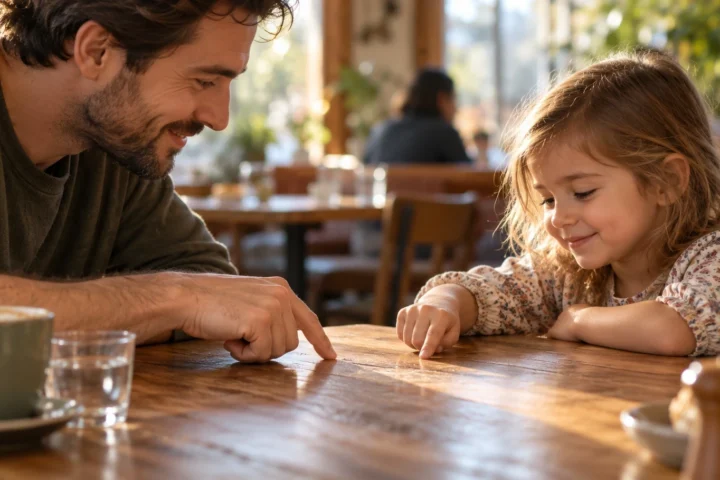
- Trace the first route with a fingertip and pause at each junction.
- Choose a direction before moving the finger through the junction.
- If the route reaches a dead end, back up to the last decision instead of starting over.
- Let the child make one extra dead end or design a short maze for the adult.
Make it easier
Shorten the round and use one clear prompt at a time. For the first try, stop after this part is complete: Trace the first route with a fingertip and pause at each junction. If that works, keep the next round of Slow Maze Time the same before adding anything else. Leave the paper arrangement unchanged so the child only has one new thing to manage.
Make it harder
Add one extra thing to remember or compare while keeping the pace calm. Keep the original ending in place: Let the child make one extra dead end or design a short maze for the adult. The extra challenge should still make the child use attention, not simply work faster.
Play together
Take turns noticing one thing at a time without turning the activity into a race. For Slow Maze Time, start the shared round with this same first step: Choose a simple wide-path maze with a clear start and finish. One round each is enough before deciding whether to continue.
Two or more players
Use a quiet turn order and let each player choose one prompt, object, sound, or observation. End the round after everyone has had one complete turn. Use the normal final step to close the group round: Let the child make one extra dead end or design a short maze for the adult. Use the same turn order for the whole round so nobody is skipped.
Skills practiced
Attention, Turn Taking
Safety
Use a finger as the default maze tracer. If drawing is added, use one intact jumbo washable crayon on a stable surface and avoid small erasers, short pencils or broken crayon pieces.
Supervision: Awareness