Screen-free play
Slow Count to Twenty
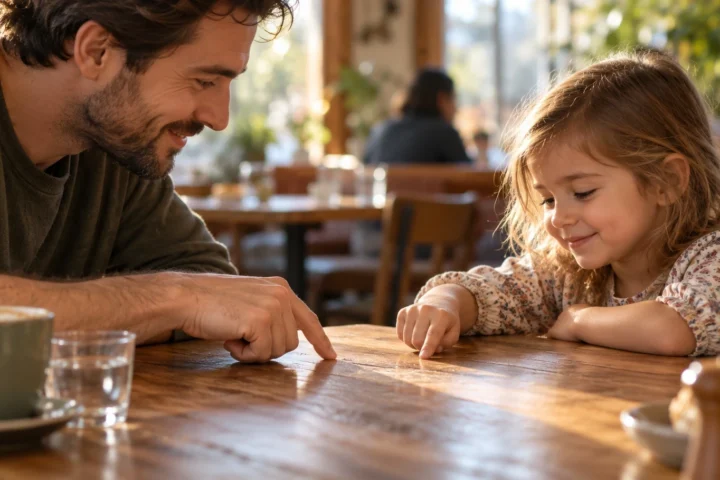
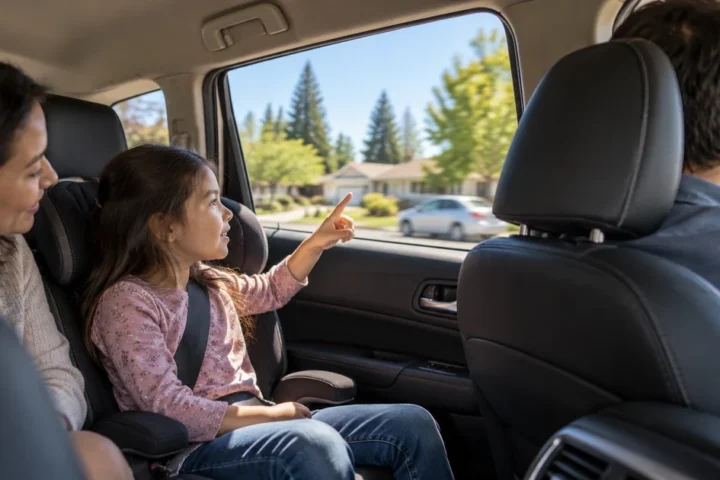
Slow Count to Twenty turns a familiar quiet moment into a focused 5-minute activity for ages 3–6.
For ages 3–6, this is roughly a 5-minute activity. Use it when the child needs a low-pressure activity with an obvious stopping point. Slow Count to Twenty needs no special materials, so you can begin without setting anything out first.
Set up the first try
Keep the opening version easy to read. Choose a calm moment and decide where to stop—ten is enough for younger children; twenty is an optional goal for those who already know the sequence. Next, count slowly together, giving each number its own beat. Once that feels clear, pause at five and ten so the sequence has landmarks instead of becoming one fast stream. Slow Count to Twenty already gives one complete round of listening, attention, and sequencing before any variation is introduced.
Keep the challenge at the right level
In Slow Count to Twenty, a few focused minutes are enough; there is no need to repeat the activity until attention is gone. A useful checkpoint comes near the end of the sequence: This is not a breath-holding exercise and should never be paired with forced breathing patterns.
Finish on a complete round
A natural place to stop Slow Count to Twenty is after the closing step: This is not a breath-holding exercise and should never be paired with forced breathing patterns. If the child asks for another round, keep the same setup once more and let listening stay at the center of the quiet and calm play activity.
If Slow Count to Twenty is not the right fit, browse more restaurant games for kids.
How to play
- Choose a calm moment and decide where to stop—ten is enough for younger children; twenty is an optional goal for those who already know the sequence.
- Count slowly together, giving each number its own beat.
- Pause at five and ten so the sequence has landmarks instead of becoming one fast stream.
- Keep counting relaxed and stop before frustration.
- This is not a breath-holding exercise and should never be paired with forced breathing patterns.
Make it easier
Remove extra choices and repeat the same calm version once. For the first try, stop after this part is complete: Count slowly together, giving each number its own beat. Stay with this simpler Slow Count to Twenty setup until the child is comfortable with it. Keep the first round focused on listening and ignore any optional extra challenge.
Make it harder
Use a slightly longer round only if attention is still steady. Keep the original ending in place: This is not a breath-holding exercise and should never be paired with forced breathing patterns. If the harder round stops using listening, remove the extra rule and return to the original version.
Play together
Take turns noticing one thing at a time without turning the activity into a race. Keep Slow Count to Twenty collaborative by using the normal first step: Choose a calm moment and decide where to stop—ten is enough for younger children; twenty is an optional goal for those who already know the sequence. Reverse the roles for the next round rather than adding another rule.
Two or more players
Use a quiet turn order and let each player choose one prompt, object, sound, or observation. End the round after everyone has had one complete turn. Do not change the basic ending just because more players join: This is not a breath-holding exercise and should never be paired with forced breathing patterns. If the group gets noisy or confused, return to one leader and one turn at a time.
Skills practiced
Attention, Listening, Sequencing, Turn Taking
Safety
Keep counting relaxed and stop before frustration. This is not a breath-holding exercise and should never be paired with forced breathing patterns.
Supervision: Awareness