
Screen-free play
Spot the Difference Together
Spot the Difference Together is a short, low-pressure activity for ages 3–6.
The activity is sized for ages 3–6 and about 10 minutes of play. It is most useful when you want a calm screen-free reset. Spot the Difference Together needs no special materials, so you can begin without setting anything out first.
Keep setup short
Start with one complete, ordinary round. Choose two similar pictures, drawings or simple arrangements with one or two visible differences. Then put them side by side at the same angle. Once that feels clear, look together and name one thing that is the same before searching for a difference. If that is working, leave the rules alone and let the child concentrate on working memory, observation, and sorting.
Build from the first successful round
In Spot the Difference Together, end after a complete round rather than stretching a quiet activity into a chore. A useful checkpoint comes near the end of the sequence: Create your own pair by moving one large object on a table, draw two simple faces with one changed feature.
Stop while it is still working
A natural place to stop Spot the Difference Together is after the closing step: Create your own pair by moving one large object on a table, draw two simple faces with one changed feature. If the child asks for another round, keep the same setup once more and let working memory stay at the center of the quiet and calm play activity.
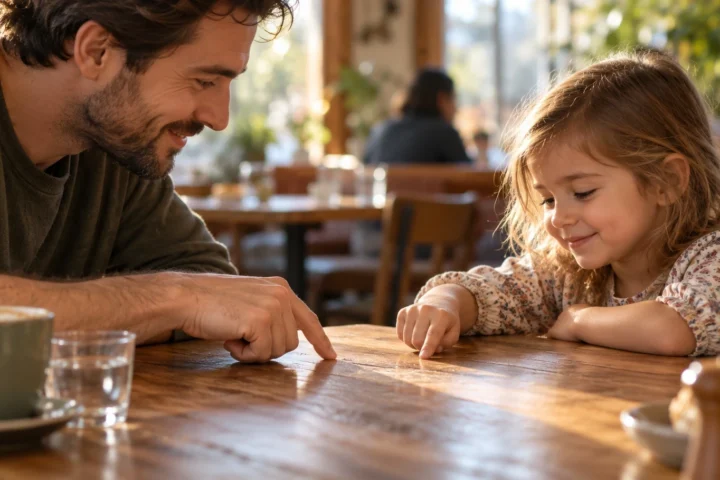
If Spot the Difference Together is not the right fit, browse more restaurant games for kids.
How to play
- Choose two similar pictures, drawings or simple arrangements with one or two visible differences.
- Put them side by side at the same angle.
- Look together and name one thing that is the same before searching for a difference.
- Give the child time to scan instead of pointing immediately.
- Create your own pair by moving one large object on a table, draw two simple faces with one changed feature.


Make it easier
Shorten the round and use one clear prompt at a time. For the first try, stop after this part is complete: Put them side by side at the same angle. Stay with this simpler Spot the Difference Together setup until the child is comfortable with it. Let the child complete one clear use of working memory before repeating the round.
Make it harder
Let the child lead the next round with fewer reminders. Keep the original ending in place: Create your own pair by moving one large object on a table, draw two simple faces with one changed feature. The extra challenge should still make the child use working memory, not simply work faster.
Play together
Take turns noticing one thing at a time without turning the activity into a race. For Spot the Difference Together, start the shared round with this same first step: Choose two similar pictures, drawings or simple arrangements with one or two visible differences. Swap who leads before repeating the round.
Two or more players
Use a quiet turn order and let each player choose one prompt, object, sound, or observation. Do not change the basic ending just because more players join: Create your own pair by moving one large object on a table, draw two simple faces with one changed feature. Do not add scoring unless competition genuinely improves the game.
Skills practiced
Attention, Observation, Sorting, Working Memory
Safety
Use age-appropriate pictures and large safe objects. Avoid small detachable pieces or cluttered setups that invite handling unsafe items.
Supervision: Awareness