

Screen-free play
Red Light, Green Light Indoors
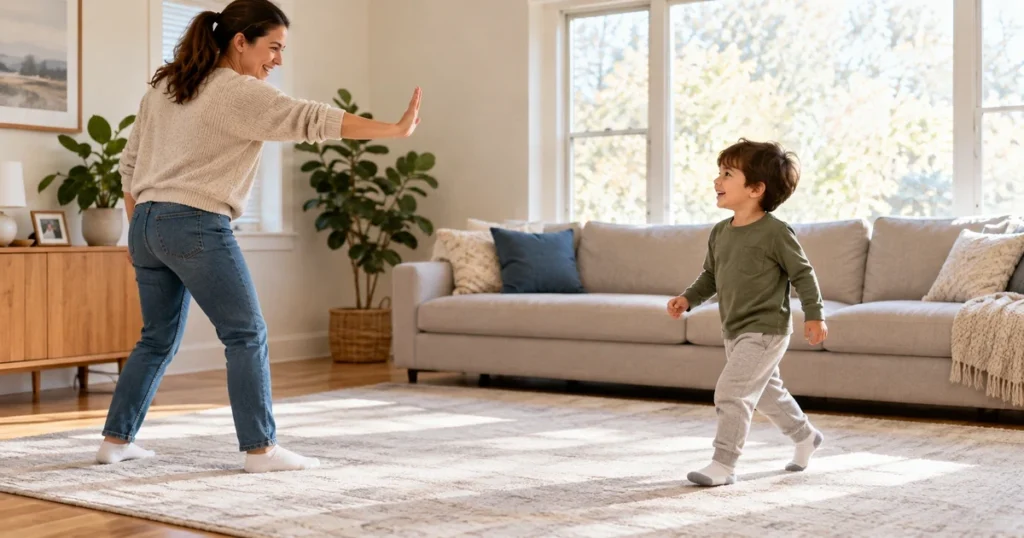
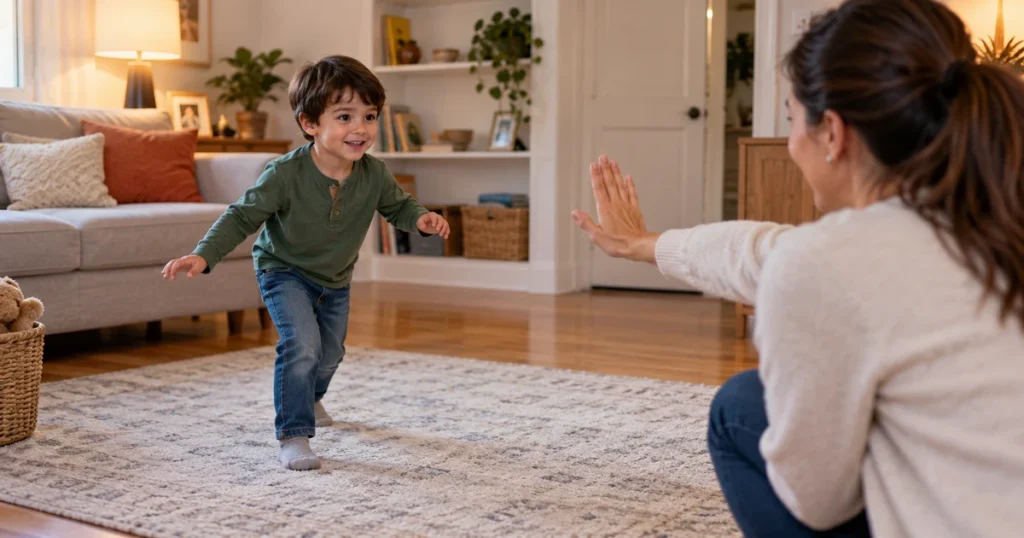
Red Light, Green Light Indoors keeps the familiar stop-and-go idea but removes the sprinting. The child moves across a clear room by walking, marching or taking tiny steps when the adult says “green light,” then stops when they hear “red light.” Because the movement is deliberately controlled, the game works in a much smaller indoor space.
Why this version works indoors
The fun comes from listening and changing action quickly, not from racing to a finish line. That means you can shorten the route, slow the movement and still keep the core challenge. Children also enjoy trying to freeze in funny positions when the signal changes.
Prepare the space
Choose one clear section of floor. Move chairs, toys and breakables out of the travel lane and keep the game away from stairs. Pick a start point and an end point only a few meters apart. Explain before the first round that green means controlled walking or marching, not running.
How to play
Stand where the child can hear and see you. Say “green light” and let them move toward the end point. Say “red light” and wait for a complete stop. Restart with green. After a few rounds, add “yellow light” for very slow steps. The child can then become the caller while the adult demonstrates careful stopping.
Parent tip
If excitement turns into sprinting, make the route shorter rather than repeating warnings from across the room. You can also switch the green-light action to marching, tiptoe steps or slow-motion walking. The game should look controlled enough that a sudden stop is easy.
Ways to change the challenge
Use different green-light movements, add a three-second freeze, or let the child invent one new signal. Older children can listen for a sequence such as green-green-red and try not to anticipate the stop. Keep new rules simple enough that the activity remains movement play rather than a memory test.
What to notice
The game naturally uses listening, inhibition, body control and quick switching between movement and stillness. If the child is laughing but still stopping safely, the game is doing its job.
Keep playing
Finish the round with the final step: After a few rounds, optionally add “yellow light” for very slow movement. After Red Light, Green Light Indoors, if you want a different idea, browse more activities for 4-year-olds.
How to play
- Clear a short indoor travel lane away from furniture, stairs and breakables.
- Choose a start point and an end point.
- Explain that green light means walking or marching, not running.
- Call “green light” and let the child move forward.
- Call “red light” and wait for a complete stop before restarting.
- After a few rounds, optionally add “yellow light” for very slow movement.
Make it easier
Use a smaller play area and repeat the same movement before adding another. For the first try, stop after this part is complete: Choose a start point and an end point. Repeat the easier Red Light, Green Light Indoors version once before deciding whether to add another step. Keep the first round focused on listening and ignore any optional extra challenge.
Make it harder
Let the child choose and remember a short movement sequence, then repeat it with control. Keep the original ending in place: After a few rounds, optionally add “yellow light” for very slow movement. Ask for a little more independence with listening before adding another layer of difficulty.
Play together
Take turns leading the route or movement while the other player follows at a controlled pace. For Red Light, Green Light Indoors, start the shared round with this same first step: Clear a short indoor travel lane away from furniture, stairs and breakables. Reverse the roles for the next round rather than adding another rule.
Two or more players
Use a fixed turn order and enough space for one child to move at a time; the others wait outside the route. The group round still ends with the original final step: After a few rounds, optionally add “yellow light” for very slow movement. Stop after everyone has had one complete turn unless the group asks for another round.
Skills practiced
Body Control, Inhibition, Listening
Safety
Use a clear, flat indoor area away from stairs and hard furniture. Indoor green light means walking, marching or another controlled movement, not running. Stop the round if children begin colliding or racing.
Supervision: Direct

